A Behavioural Perspective on Scarcity, Choice, and the Modern Self
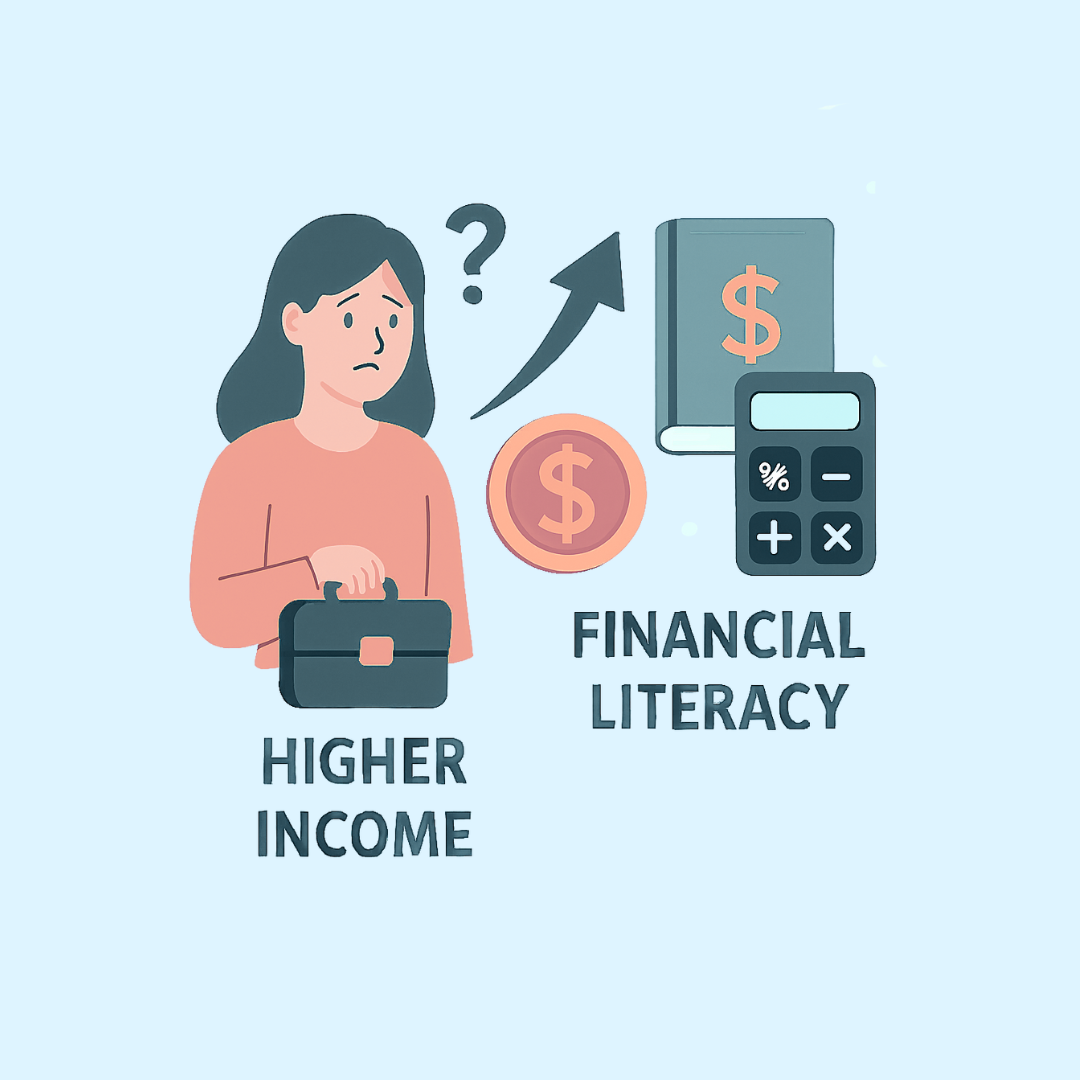
Financial literacy is commonly framed as a corrective tool for poverty—an intervention designed to help those with limited resources make better decisions. Yet behavioural evidence suggests a more counterintuitive reality: the cognitive burden of financial decision-making increases with income, not decreases.
When resources are scarce, financial behaviour is shaped by constraint. Spending is necessity-driven, options are limited, and decisions are repetitive. Under these conditions, behaviour becomes routinized; individuals learn quickly what is affordable and what isn’t, and what trade-offs must be made. Financial decision-making, while stressful, is structurally simple.
As income increases, however, the decision environment changes fundamentally.
Scarcity, Attention, and Behavioural Discipline
Research on scarcity by Sendhil Mullainathan and Eldar Shafir demonstrates that limited resources narrow attention and force prioritization. Scarcity, while cognitively taxing, can also produce behavioural discipline: focus is directed toward immediate necessities, and non-essential choices are filtered out.
In contrast, abundance expands the decision set.
Higher income introduces discretionary spending, complex financial products, credit access, investment decisions, and future-oriented trade-offs. This expanded choice architecture increases cognitive load and exposes individuals to well-documented behavioural biases, including overconfidence, present bias, and social comparison.
From this perspective, financial literacy becomes more critical—not less—as income rises. The risk is no longer survival, but misallocation, erosion, and long-term inefficiency.
Income, Choice, and the Illusion of Competence
Behavioural finance research consistently shows that higher income and education do not immunize individuals against irrational financial behaviour. In fact, increased income can amplify certain biases. Access to credit and leverage can delay negative feedback,allowing poor decisions to persist unnoticed. Lifestyle inflation, mentalaccounting errors, and optimism bias become more pronounced when financialbuffers exist.
This reframes financial literacynot as a poverty intervention, but as a complexity management skill—onethat becomes essential precisely when individuals have more options thanconstraints.
Extendingthe Framework Beyond Finance
If income alters the cognitivedemands of financial decision-making, a parallel question emerges:
Do certain psychological concerns arise only once material scarcity isresolved?
Modern discourse places significant emphasis on self-exploration and self-love, yet historically, these were not central preoccupations. Classical Greek philosophy, for example, emphasised virtue, duty, and rational conduct rather than self-affirmation oridentity discovery. Reflection existed, but it was oriented toward ethical action,not self-optimization.
This is not accidental.Self-reflection of this nature requires surplus—time, safety, and cognitivebandwidth. When life is governed by survival or collective responsibility,inward focus is constrained. Behaviour is externally anchored.
From a behavioural standpoint,self-love may function similarly to financial literacy: it becomes salientonly when choice and excess allow it to emerge.
Abundance,Choice Overload, and the Modern Condition
Research on choice overload, most notably by Barry Schwartz, suggests that increased options can reduce satisfaction and impair decision-making. This applies not only to consumer behaviour, but to identity, purpose, and self-evaluation.
In both financial andpsychological domains, abundance introduces ambiguity. The question is nolonger “What must I do?” but “What should I choose?” This shift increasesuncertainty, regret, and cognitive strain.
Implicationsfor Policy, Education, and Research
This reframing carries importantimplications:
- Financial literacy programs should not be targeted solely at low-income populations; high-income individuals face distinct, and often underestimated, behavioural risks.
- Interventions should focus on managing complexity, not just teaching budgeting basics.
- Research on financial behaviour should account for choice environments, not income alone.
- Broader societal conversations around well-being should recognise that many modern psychological challenges are by-products of abundance, not deficits.
Conclusion
We often treat wealth, comfort, and choice asunqualified goods. Behaviourally, they are not.
Abundance does not simply freepeople—it reconfigures the problems they face. It replaces constraint withambiguity, necessity with negotiation, and discipline with discretion. Themodern individual is not struggling because they lack resources, but becausethey are required to continuously choose—how to spend, how to live,who to be, and how to feel about themselves while doing so.
This is why financial illiteracy can thrive at highincome levels.
This is why self-love becomes a question only when survival is no longer one.
Neither financial literacy nor self-reflection areuniversal human needs; they are by-products of surplus; they emerge whenlife stops demanding answers and starts offering options.
The uncomfortable implication is this: many of ourcontemporary anxieties are not signs of failure—but symptoms of comfortunmanaged.
If scarcity once constrained human behaviour tootightly, abundance now risks loosening it without guidance. The challenge aheadis not to romanticise struggle or reject progress, but to acknowledge a truthwe rarely admit:
Abundance requires as much skillto survive as scarcity ever did.
And we have only just begun to teach it.

.png)
